
The Clark Signature
INTRODUCTION
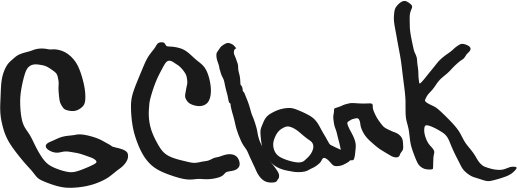
Gary Clark’s paintings are often recognized by a distinctive signature applied directly to the surface of the work. Rather than a fixed or graphic emblem, the Clark signature is a painterly gesture that evolved alongside the artist’s handling of brush, line, and mark.
Across decades of independent studio practice, the signature moves between dense brushwork, written forms, and expressive gestures, reflecting the tools and methods used in the creation of each painting.
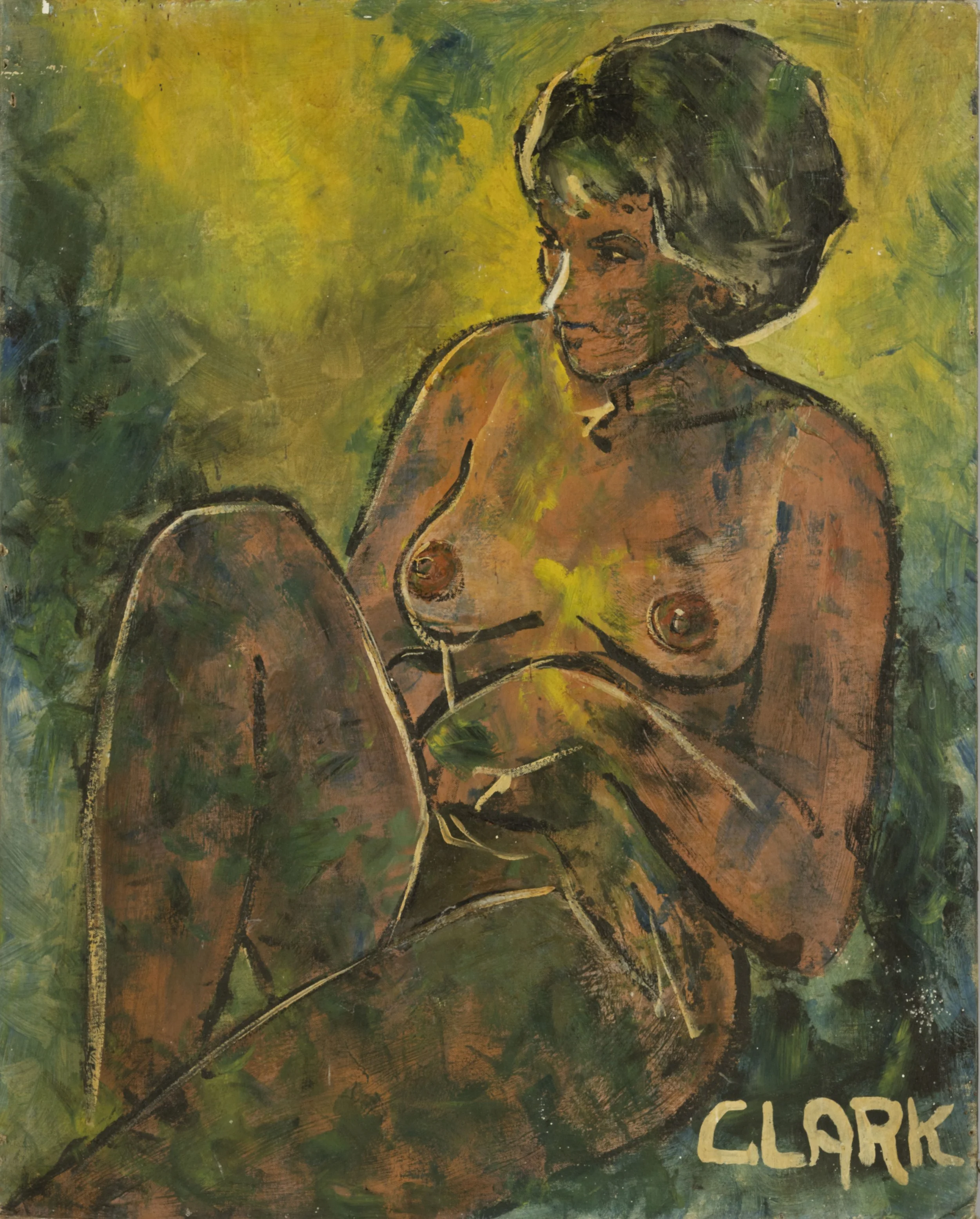
The Clark signature is typically found on the front of the painting, most often along the lower edge. In later works, the form of the signature often reflects the tool used to create the painting itself.
Earlier works tend to show more controlled or written forms, while later works frequently feature more expressive, gestural applications of the name.
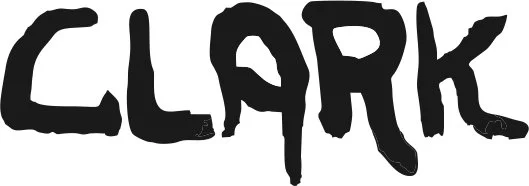
Clark Signature I
c. 1958–1974
(Dense Brush Signature)
Early works feature a heavily loaded brush application of the name, resulting in bold, sculptural letterforms. While the letters appear graphic, the signature is executed as a continuous painted gesture.
Clark Signature I
c. 1958–1974
(Dense Brush Signature)
Early works feature a heavily loaded brush application of the name, resulting in bold, sculptural letterforms. While the letters appear graphic, the signature is executed as a continuous painted gesture.

Gary Clark working in the studio during the creation of a painting.

A painting of a man wearing a wide-brimmed hat and a suit is on an easel in an artist's studio, with a window showing trees and a framed landscape painting on the wall.

Studio with a colorful painting of a woman in a hat and sunglasses on an easel, various art supplies, and another painting partially visible in the background.